Get Free Consultation!
We are ready to answer right now! Sign up for a free consultation.
I consent to the processing of personal data and agree with the user agreement and privacy policy


We are online 24/7
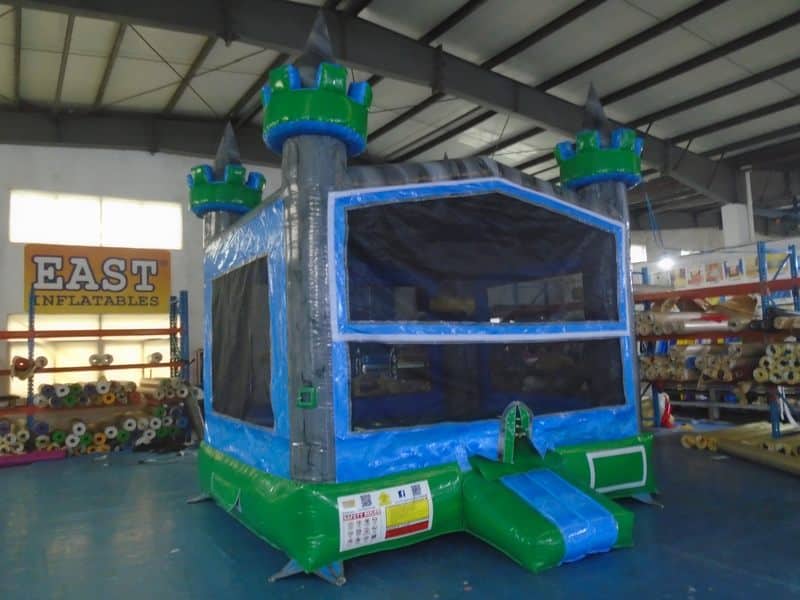
At first glance, buying a bounce house seems straightforward. Many buyers focus on size, assuming that if two bounce houses share the same dimensions, they should feel the same during use. In practice, this assumption often leads to disappointment. Two bounce houses with identical measurements can feel dramatically different once children start jumping inside.
This difference is not accidental. It is the result of design decisions, engineering priorities, and manufacturing choices that are rarely visible in product photos or basic specifications. Understanding why size alone is misleading can help buyers make far better decisions—especially when choosing a bounce house intended for frequent or commercial use.
Dimensions describe how much physical space a bounce house occupies, but they say very little about how that space behaves under load. Jumping is not static. Every bounce creates impact, rebound, and shifting pressure throughout the structure.
When a bounce house performs well, that energy is absorbed and redistributed smoothly. When it does not, users feel instability, uneven bounce, or sudden softness underfoot. Two units can measure exactly the same yet manage energy in completely different ways.
One of the biggest differences between bounce houses of the same size lies in their internal air chamber structure. Some designs rely on a single large air cavity, while others divide the interior into multiple chambers.
Multi-chamber designs help distribute pressure more evenly across the jumping surface. When several children jump at once, the force does not collapse one specific area. Instead, the structure maintains consistent resistance across the floor.
Single-chamber designs may feel acceptable when lightly used, but under heavier or repeated impact, pressure drops are more noticeable. This leads to soft spots and inconsistent bounce, even though the bounce house appears fully inflated.
The floor is the most heavily stressed component of any bounce house. How it is constructed has a major impact on how the unit feels.
Some floors use layered reinforcement in high-impact zones, while others rely on uniform material thickness throughout. Reinforced floors respond more predictably under repeated jumping, maintaining firmness over time.
Poorer floor construction often feels fine at first but degrades quickly. As material stretches and seams absorb repeated stress, the bounce becomes less responsive, giving the impression that the bounce house is “losing air” even when the blower is functioning properly.
Side walls are not just visual boundaries. They contribute directly to how the bounce house behaves during use. Well-tensioned walls help maintain structural integrity, preventing inward collapse and preserving consistent internal pressure.
When wall reinforcement is minimal, walls flex inward with each jump. This reduces usable space and alters how energy is absorbed, often making the bounce feel unpredictable.
Over time, insufficient wall tension also leads to shape deformation. Even if the bounce house still inflates fully, it may never feel as firm or controlled as it did initially.
Two bounce houses of the same size can have very different centers of gravity. Factors such as base width, material distribution, and reinforcement placement all influence stability.
A lower, wider base with proper reinforcement creates a grounded feel. A narrower base or uneven material distribution raises the center of gravity, increasing movement during use.
This difference becomes especially noticeable when multiple users are jumping or moving toward the same side. A well-balanced bounce house remains stable, while a poorly balanced one shifts or rocks.
Material specifications often focus on thickness, but thickness alone does not determine performance. Flexibility, coating quality, and fatigue resistance all affect how materials behave over time.
Materials that are too stiff may resist deformation initially but crack or weaken under repeated impact. Materials that are too soft may stretch excessively, reducing bounce consistency.
High-performing bounce houses use materials chosen not only for strength, but for how they respond dynamically to repeated stress. This balance directly affects how the bounce house feels after weeks or months of use.
Seams are the silent failure point in many bounce houses. Even when materials are strong, poor seam construction allows micro-movements that gradually weaken the structure.
Reinforced seams help maintain consistent air pressure and structural alignment. Weak seams stretch unevenly, altering how the bounce house responds to impact.
This is one reason why experienced buyers often judge quality by construction details rather than size or appearance alone.
The difference between bounce houses of the same size often reflects a manufacturer’s priorities. Some focus on visual appeal and short-term cost efficiency. Others prioritize long-term performance, durability, and user experience.
Manufacturers with extensive commercial experience tend to engineer bounce houses for repeated use rather than occasional play. An experienced manufacturer like East Inflatables, for example, designs products with long-term stress behavior in mind—addressing internal structure, reinforcement, and balance before focusing on external appearance.
These decisions may not be visible in product listings, but they strongly influence how a bounce house feels during real-world use.
If size alone is unreliable, what should buyers focus on?
Asking questions about these areas provides far more insight into performance than comparing dimensions alone.
Size is easy to measure and easy to market, which is why it dominates bounce house listings. But performance is not defined by space—it is defined by how that space is engineered.
Two bounce houses of the same size can feel completely different because they are built with different priorities, structures, and expectations for real-world use. Buyers who understand this distinction avoid disappointment and choose products that perform consistently, not just look good on paper.
