Get Free Consultation!
We are ready to answer right now! Sign up for a free consultation.
I consent to the processing of personal data and agree with the user agreement and privacy policy


We are online 24/7
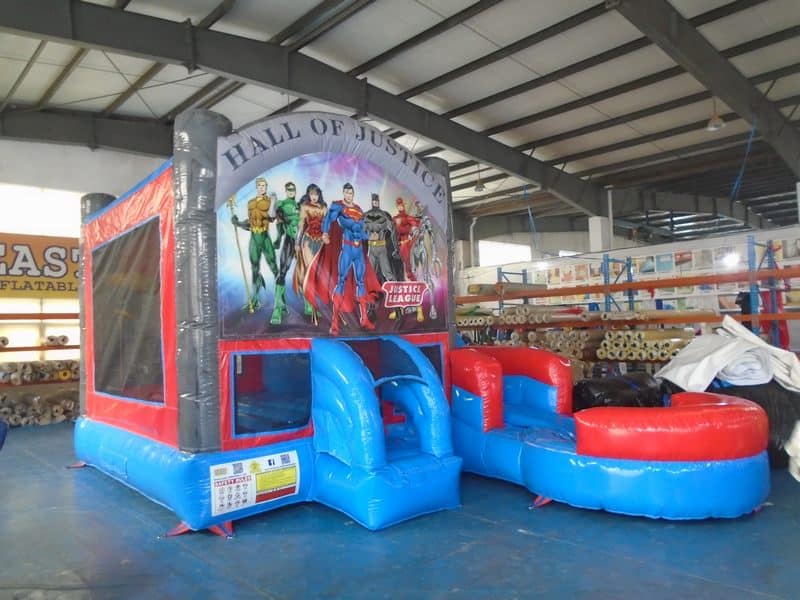
A bounce house does not need to fail to feel cheap. In many cases, users sense low quality within minutes of use—even when the structure remains fully inflated and visually intact.
This perception is not subjective. It is created by specific design and construction details that directly affect how the bounce house behaves during real use.
One of the first indicators of poor quality is uneven bounce response. When some areas feel firm while others feel soft, users immediately notice the inconsistency.
This issue is usually caused by uneven internal structure or insufficient reinforcement in high-impact zones. Over time, these soft spots worsen, further reducing confidence.
Walls that flex excessively during use create a sense of instability. Even if the bounce house remains upright, excessive movement makes users cautious and reduces enjoyment.
Well-designed walls maintain tension and shape, absorbing energy without collapsing inward. Poorly designed walls shift independently, making the structure feel uncontrolled.
Noisy seams, flapping panels, or excessive vibration often indicate weak reinforcement. These sounds signal movement where structure should exist.
While noise does not always indicate immediate failure, it strongly influences perceived quality and user comfort.
Interior surfaces matter more than many buyers realize. Rough textures, visible folds, or uneven seams create discomfort during use and reinforce the impression of poor craftsmanship.
Smooth, consistent interior surfaces contribute to a more refined user experience and reduce wear on the material.
Entry points are often overlooked during evaluation. Poorly designed entrances feel unstable or awkward, affecting the user’s first impression.
A well-designed entry supports weight smoothly and transitions users into the jumping area without hesitation or imbalance.
The most important insight is that a cheap feel often appears before visible damage. It reflects design shortcuts rather than material failure.
Once users perceive a bounce house as cheap, that impression rarely changes—even if the product technically functions as intended.
A bounce house feels cheap because of cumulative design and construction decisions, not simply because it costs less.
Buyers who recognize these details avoid products that technically work but fail to deliver a confident, enjoyable user experience.
