Get Free Consultation!
We are ready to answer right now! Sign up for a free consultation.
I consent to the processing of personal data and agree with the user agreement and privacy policy


We are online 24/7
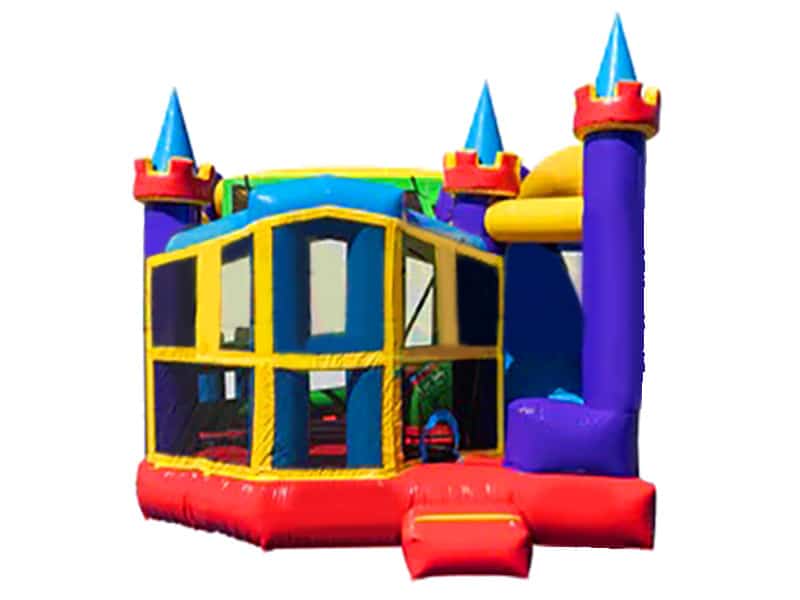
When buying a bounce house, most buyers focus on how it looks on day one. Bright colors, clean seams, and full inflation can create a strong first impression. Unfortunately, long-term performance rarely reveals itself at first glance.
Many bounce houses that look perfectly fine during initial setup begin to show problems after weeks or months of regular use. Understanding the early warning signs can help buyers avoid products that fail prematurely.
Below are seven warning signs that often indicate a bounce house may not hold up well over time.
A new bounce house should feel consistent across the entire jumping surface. If some areas feel noticeably softer than others during early use, this usually signals uneven internal structure.
Over time, these soft zones tend to worsen, leading to poor user experience and accelerated material fatigue.
Walls should move slightly to absorb energy, but excessive inward collapse is a red flag. If walls flex dramatically when users jump nearby, the structure is likely under-reinforced.
This not only affects safety perception but also places additional stress on seams and anchor points.
Every jump displaces air momentarily. A well-designed bounce house recovers pressure almost instantly. If pressure recovery feels slow, even with a properly sized blower, internal airflow design may be insufficient.
This often leads to progressive softness as usage intensity increases.
Early signs of seam stress—such as puckering, stretching, or slight deformation—often indicate poor stress distribution. These issues rarely fix themselves and typically worsen with repeated use.
Strong seams should remain visually stable during normal operation.
If the base shifts noticeably during use, even when anchored, the structure may lack sufficient base width or reinforcement. Movement at the base accelerates wear throughout the entire unit.
Long-term durability depends heavily on a stable foundation.
Bounce houses designed without long-term stress management often lose their original shape quickly. Sagging floors or leaning walls after a short period of use are strong indicators of poor structural planning.
When design emphasizes visual appeal at the expense of reinforcement and structure, long-term performance usually suffers. Buyers often encounter this when products look impressive but feel unstable or inconsistent during use.
Experienced manufacturers—such as EastJump—tend to design with repeated real-world use in mind, prioritizing durability that may not be immediately visible in photos.
Most long-term failures can be predicted early if buyers know what to look for. These warning signs do not guarantee failure, but ignoring them greatly increases the risk of disappointment.
A bounce house that performs well long-term is rarely the result of luck—it is the result of deliberate design choices.
