Get Free Consultation!
We are ready to answer right now! Sign up for a free consultation.
I consent to the processing of personal data and agree with the user agreement and privacy policy


We are online 24/7
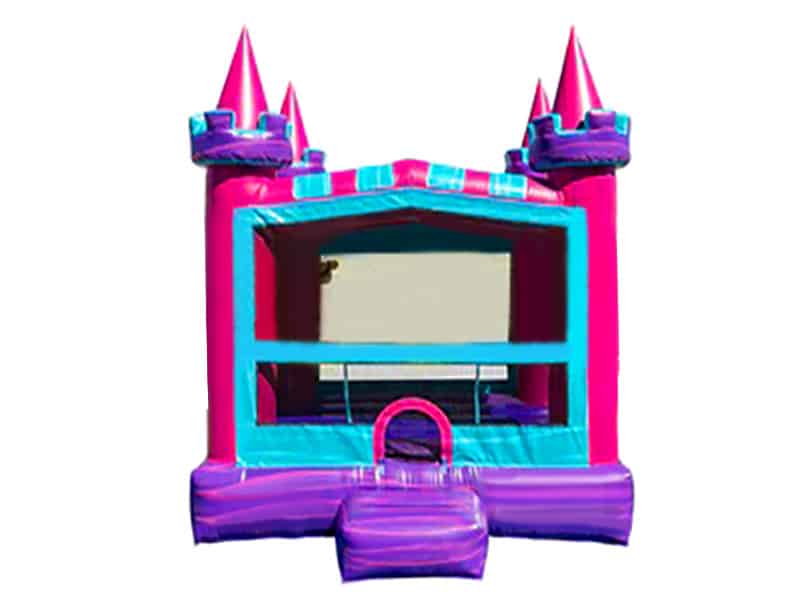
If you’ve recently purchased or rented a bounce house for your backyard in the U.S., you’re likely familiar with the constant “hum” of the air blower. As the party goes on, a common question often pops up among parents: “Does the blower have to stay on the entire time?” Whether you’re worried about your electricity bill, the noise level, or simply wondering if the inflatable will hold its shape for a quick break, understanding how these blowers work is crucial for both safety and the longevity of your investment.
In this guide, we’ll break down the mechanics of bounce house blowers, the costs involved, and why choosing a high-quality brand like Eastjump can make a world of difference.
The most important thing to understand is that a standard bounce house is not a sealed inflatable. Unlike a pool float or an air mattress that you pump up and plug, a bounce house is “constant air” equipment.
Bounce houses are made of heavy-duty fabrics (like Oxford cloth or PVC vinyl) that are sewn together. These seams are intentionally not airtight. Small amounts of air constantly escape through the needle holes and stitching.
To counteract this constant “leaking,” the blower must continuously pump air into the unit. If you flip the switch to “Off,” the bounce house will begin to lose its internal pressure immediately. Within 30 to 60 seconds, the structure will collapse.
It might be tempting to turn the blower off during a 15-minute lunch break to save power or get some peace and quiet. However, this is a significant safety hazard:
Many American homeowners worry that running a 1-HP (horsepower) or 2-HP motor for six hours will spike their utility bill. Let’s do the math based on average U.S. electricity rates.
Most residential blowers, like those provided with Eastjump inflatables, pull between 480W and 750W (roughly 0.6 to 1.0 HP).
In short: It costs less than a single cup of coffee to power a bounce house for an entire party.
Not all blowers are created equal. Cheap, generic blowers can be excessively loud, prone to overheating, or energy-inefficient.
When you choose a reputable brand like Eastjump, you aren’t just getting a bounce house; you’re getting a synchronized system designed for the American backyard environment.
There are only a few scenarios where you should hit the “Off” switch:
To ensure your blower lasts for years, follow these simple steps:
Keeping the blower on is a non-negotiable part of the bounce house experience. It ensures the safety of the children and the integrity of the inflatable. Fortunately, the cost of operation is negligible, especially when using efficient equipment from trusted brands like Eastjump.
By investing in quality gear and following these simple operational rules, you can focus on what really matters: letting the kids burn off that extra energy while you relax (relatively) quietly nearby.