Get Free Consultation!
We are ready to answer right now! Sign up for a free consultation.
I consent to the processing of personal data and agree with the user agreement and privacy policy


We are online 24/7
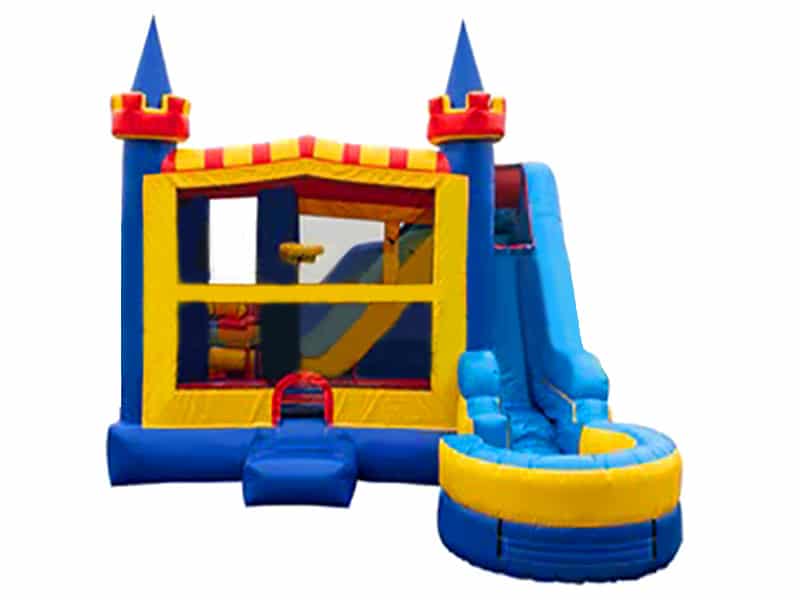
In many parts of the U.S., a sudden summer afternoon thunderstorm is almost a rite of passage for backyard birthday parties. One minute the sun is shining, and the next, you’re scrambling to save the cake—and the bounce house.
If you find yourself staring at a giant inflatable as the clouds open up, don’t panic. While water and inflatables aren’t best friends, a little rain won’t ruin your investment if you act quickly. Here is the professional emergency protocol for handling a wet bounce house, with tips on how Eastjump designs make this process much easier for homeowners.
As soon as you see lightning or hear thunder, the party on the inflatable must end. Safety is the absolute priority.
If the storm looks like it will last a while, you need to minimize how much water gets inside the unit. Once the air is out, a bounce house acts like a giant bowl, collecting hundreds of gallons of water.
One reason Eastjump has become a favorite for American families is that they understand backyard reality. Unlike heavy, cumbersome commercial units that require a team of three to move when wet, Eastjump’s residential and light-commercial lines are designed with manageability in mind.
Never, ever store a wet bounce house. If you roll it up while damp and leave it in your garage, you will have a mold and mildew nightmare within 48 hours.
A: Most blowers are “weather-resistant” but not “waterproof.” A few drops are fine, but heavy rain can short the motor. Always prioritize covering or moving the blower during a storm.
A: On a sunny, breezy day, a fully inflated unit can dry in about 1 to 2 hours. If it’s humid or cloudy, it might take 3-4 hours.
A: If the rain doesn’t stop, leave it folded and covered. As soon as the sun comes out the next morning, you must inflate it. Do not let it sit for more than 24 hours while wet.
A: Not if it’s a quality unit like an Eastjump. Their UV-resistant and waterproof coatings are built to handle the elements. The only thing that will ruin it is mold from improper storage.
A: It’s not recommended. Aside from being slippery, the added weight of jumpers can trap water in the seams, making the drying process take much longer.