Get Free Consultation!
We are ready to answer right now! Sign up for a free consultation.
I consent to the processing of personal data and agree with the user agreement and privacy policy


We are online 24/7
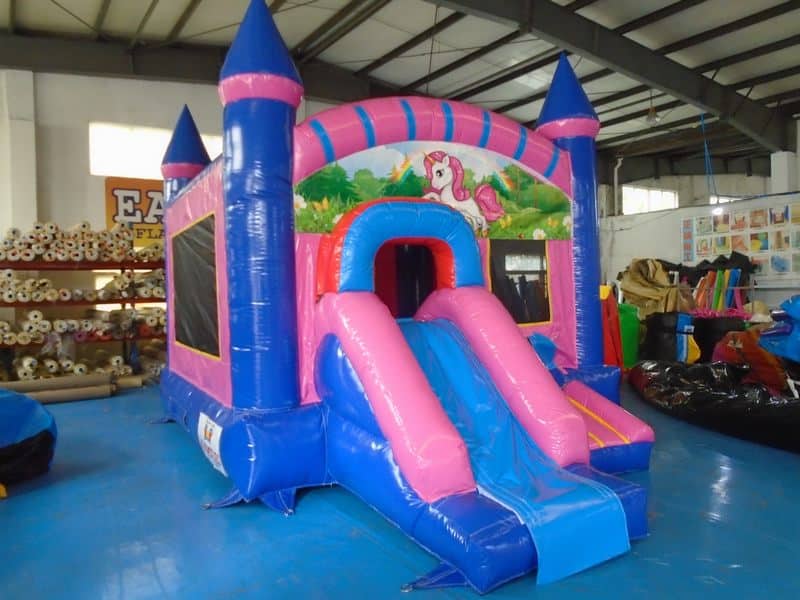
As a commercial inflatable rental owner in the U.S., a sudden power outage or blower failure is the ultimate test of your safety protocols. While professional-grade 0.55mm (18oz) PVC units are designed for durability, the moment the air stops, a countdown begins.
In this guide, we cover the critical “Golden Minute,” evacuation procedures, and how to prevent blower failure before it happens.
The biggest fear for parents is an instant collapse. However, high-quality commercial inflatables do not deflate like a popped balloon.
If the blower stops humming, the onsite supervisor must act immediately. Follow the “S.E.E.D” method:
Understanding the “Why” can help you prevent a liability claim. Most failures in the U.S. market are caused by:
Q: How long does it take for a commercial bounce house to fully deflate?
A: A standard commercial unit made of heavy-duty PVC typically takes 30 to 90 seconds to lose its structural shape after power loss. However, large slides may fold faster due to their height.
Q: Can I use a regular household extension cord for a 1.5HP blower?
A: No. Standard household cords (14 or 16-gauge) cannot handle the 12-amp draw of a 1.5HP motor over long distances. This causes voltage drops, leading to motor failure or fire hazards. Always use a 12-gauge (12AWG) outdoor-rated cord.
Q: Is it safe to run a 1.5HP blower in the rain?
A: While most commercial blowers are water-resistant, they are not waterproof. Operating in heavy rain increases the risk of electrical shock. Always use a GFCI-protected outlet and follow ASTM weather safety guidelines.
Q: What is a “Non-Return Flap” in an inflatable?
A: It is a safety fabric flap inside the inflation tube. If the blower fails, the flap closes automatically due to internal air pressure, significantly slowing down the deflation rate and giving children more time to exit safely.
A blower failure doesn’t have to be a disaster. By using professional 1.5HP blowers, heavy-duty 0.55mm PVC material, and trained staff, you can ensure that even if the power goes out, everyone stays safe.
Providing high-quality equipment and adhering to ASTM F2374 or OSHA standards isn’t just about safety—it’s your most powerful marketing tool for building a reputable rental brand in the United States.